Gallery wall field note
Gallery wall spacing and layout.
Consistent spacing is what makes separate prints read as one intentional arrangement. Start with 2-3 inches between frames, calculate the full outside width, and center the group as a single piece.
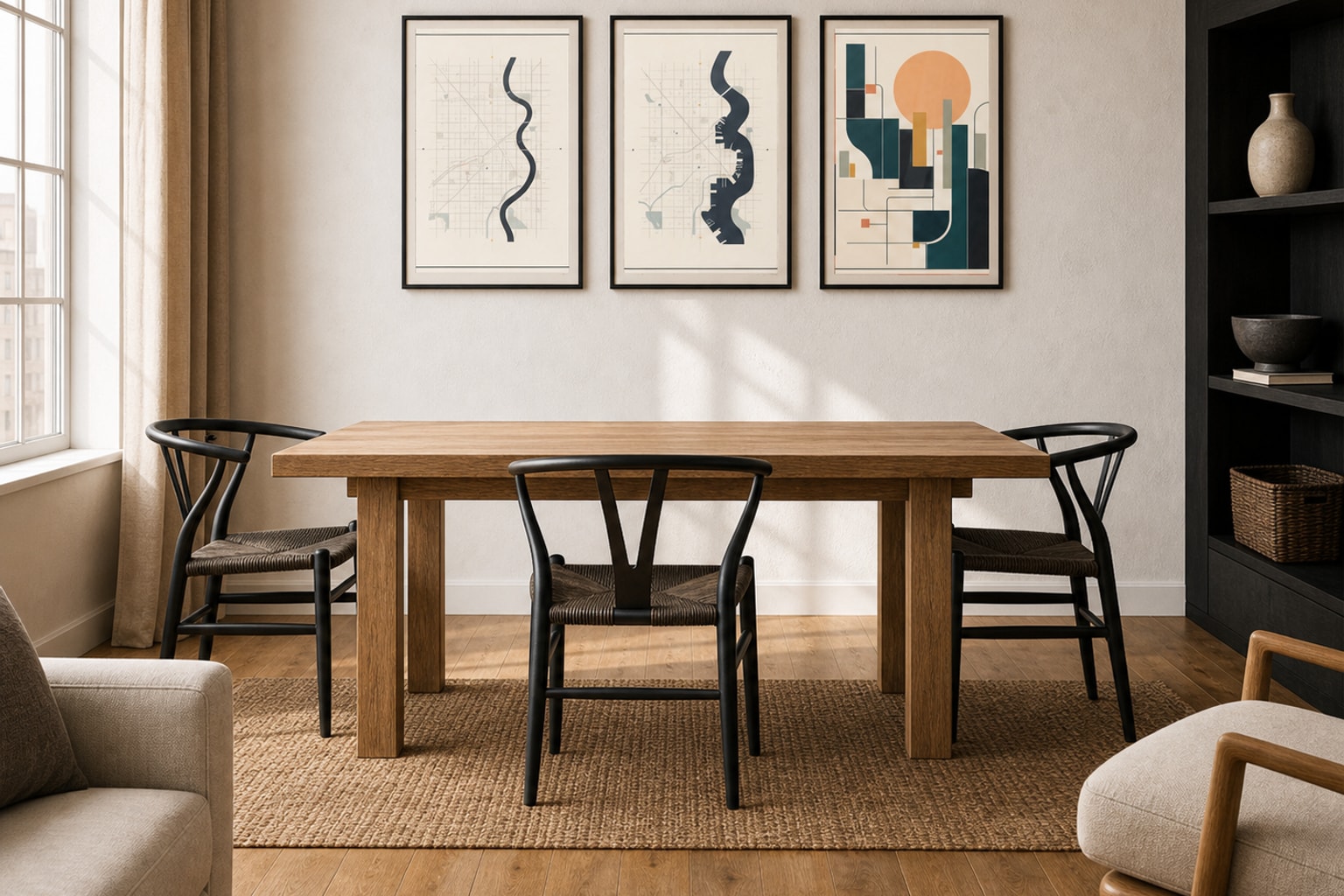
The dependable rule
Keep 2-3 inches between frames.
Use the same gap everywhere: horizontally, vertically, and between rows. Tight spacing creates a stronger relationship between the pieces; gaps larger than 5 inches often make a small gallery wall feel scattered.
Width formula
Add every frame and every gap.
For three 18-inch-wide frames with 3-inch gaps, the full arrangement is:
18 + 3 + 18 + 3 + 18 = 60 inches
Use that 60-inch total when comparing the gallery wall to a sofa, bed, desk, or console. The full group should usually cover 60-75% of the furniture width.
Three layouts that stay balanced.
Two-print pair
Use matching sizes and align the top and bottom edges. This is the calmest option for bedrooms and compact sofas.
Horizontal trio
Ideal above a long sofa, console, or dining table. Keep all three centerlines level and the gaps identical.
Two-by-two grid
A grid adds more height for a tall wall. Keep horizontal and vertical spacing equal so it reads as one block.
Before making holes
Test the arrangement on the floor.
- Measure and mark.Outline the furniture width with painter's tape on the floor.
- Arrange the frames.Start with 3-inch gaps and adjust before measuring the outside width.
- Make a paper template.Trace each frame on paper, tape the templates to the wall, and check the group from across the room.
- Hang from the center out.Place the middle print first, then build outward using the same gap.
Shop coordinated art
Wall sets that already get along.
Start with related palettes and consistent proportions, then choose one frame finish across the arrangement.
 Salt Meadow Fold
 Ochre Drift
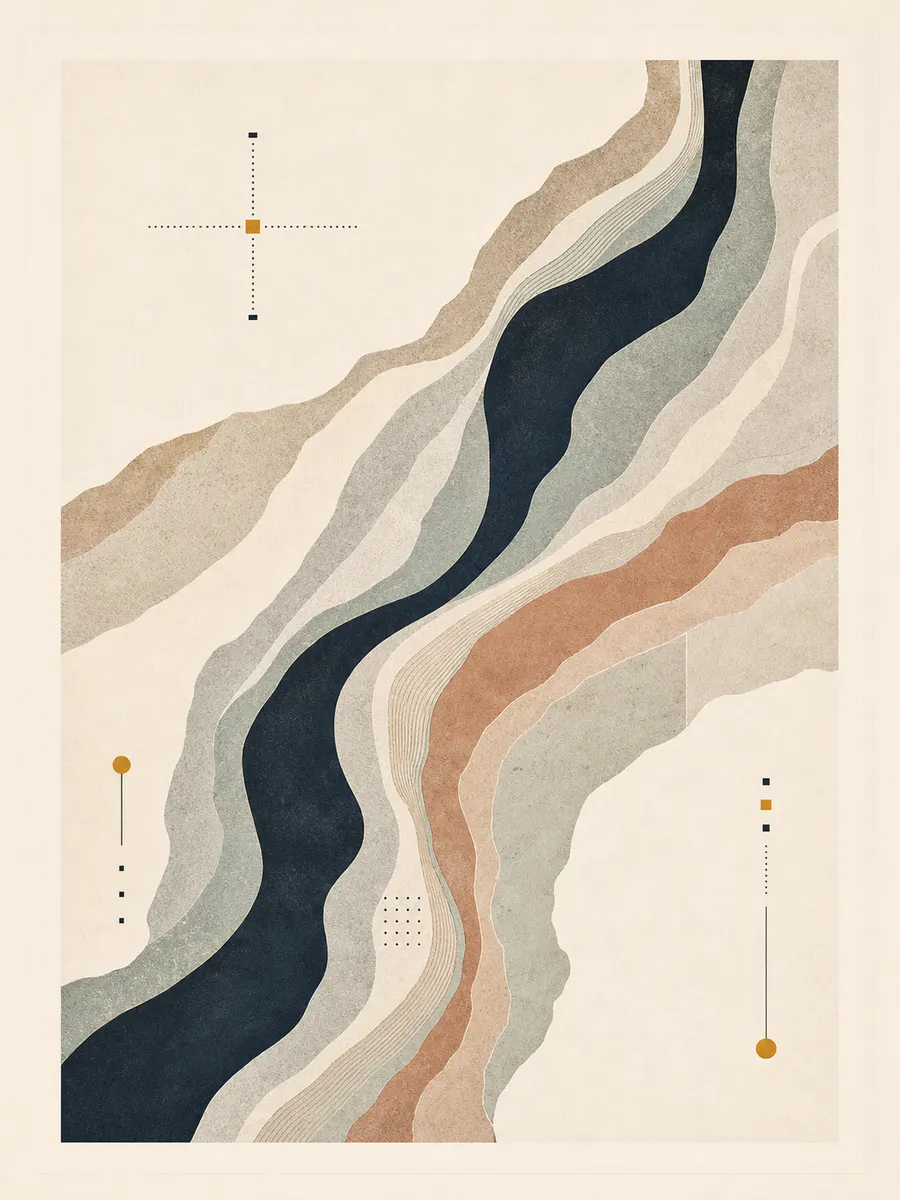 Mineral Current